How to Win Back Your Team’s Focus, so their best energy goes to your most important work.
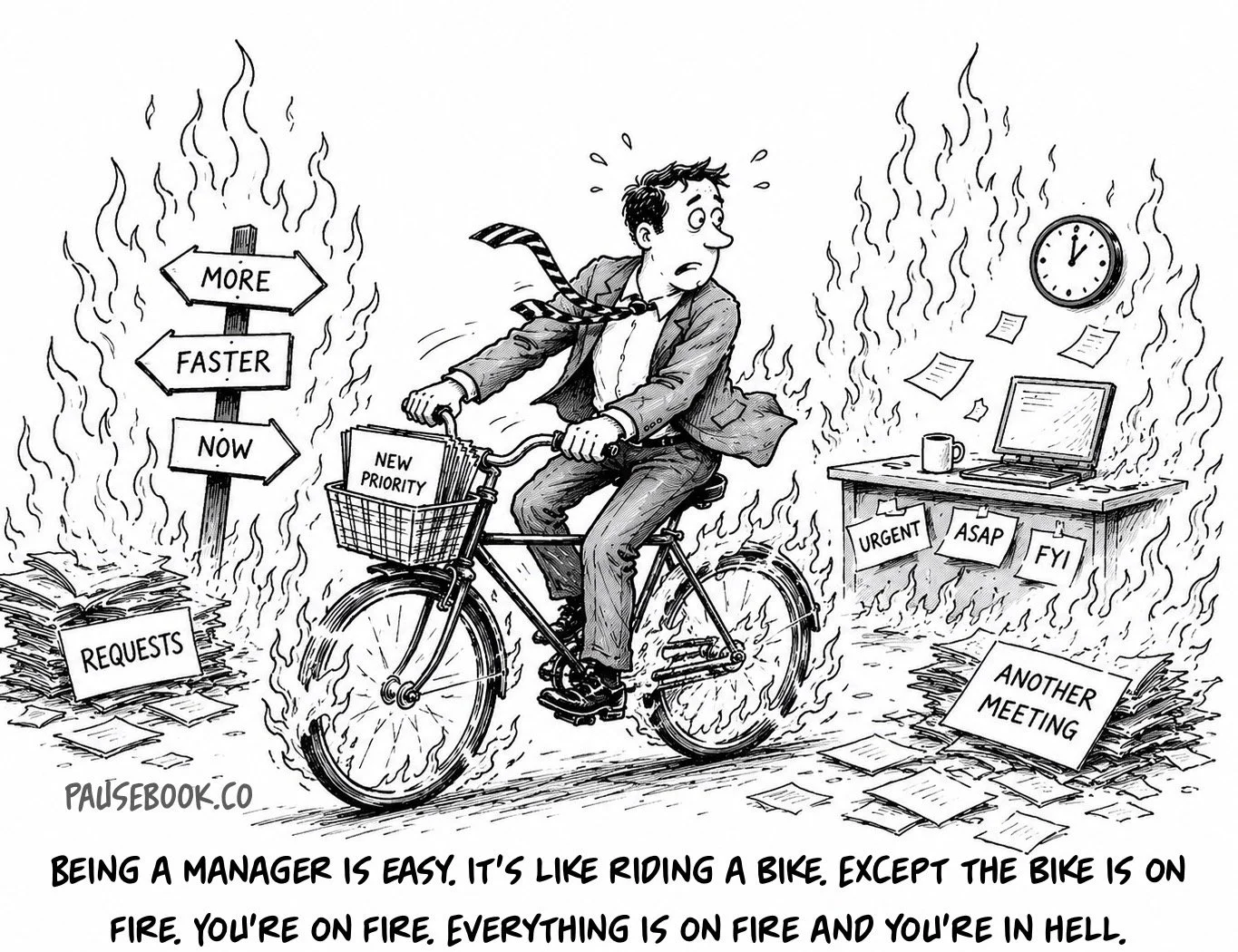
As a leader, you’re expected to deliver results all while priorities multiply and resources tighten. You need your team to be able to focus their attention on top priorities, but the way work happens every day can make that insanely difficult.
When progress slows, most of us do what comes naturally. We just add more.
But before you ask your team to do more, it’s worth looking at what’s getting in the way of high-quality work.
Our research with leaders at more than 150 companies revealed that some of the biggest obstacles to productivity come from the environment surrounding the work. And leaders have far more influence over that environment than they may realize.
The highest-performing teams didn’t necessarily have fewer distractions. Sometimes, they were the busiest. Their leaders just had better ways of keeping distractions from taking over.
The difference was significant: people working for leaders who knew when to pause and recalibrate how the work was getting done reported spending 3× as much energy on priority work.
So what did these leaders understand that others missed?
The Productivity Problem Is Social
You can hire talented people, give them clear goals, and trust them to manage their time. But their time isn’t entirely theirs to manage.
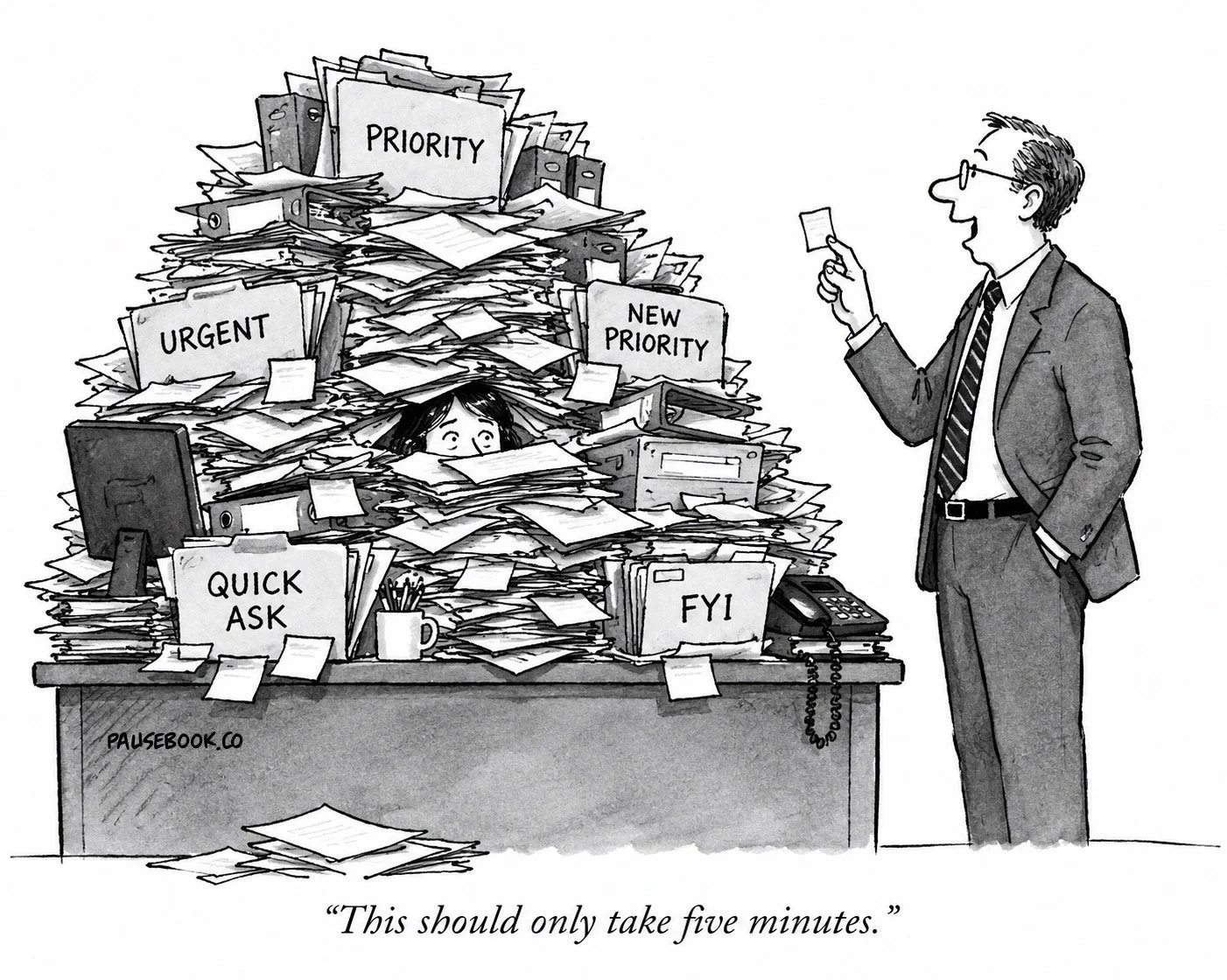
An urgent request comes in. A meeting gets added. Another project lands, but nothing comes off the list. Then there’s the quick question that will “only take five minutes.”
None of these demands seems unreasonable on its own. But they add up. What feels like one small request from you becomes one more thing competing for your team’s limited attention.
That’s the problem with most productivity advice. It assumes individuals have far more control over their time and attention than they actually do.
At work, focus is social.
That’s why our research led us to rethink productivity. The goal isn’t to squeeze more work out of your people. It’s to create an environment where they can spend more of their limited time and attention on the work that’s most important.
So where can leaders make the biggest difference?
The Shift From Action to Impact
One of the central findings behind Pause is the difference between a bias toward action and a bias toward impact.
A bias toward action is when a leader assumes success comes through speed and volume. When demands increase, the natural response is to do more, move faster, and be on.
A bias toward impact starts with a different belief: people are smart, but they have limited bandwidth. Exceptional results come from leveraging their intelligence and time, which means giving people space to focus on the right things.
The goal isn’t to slow down for the sake of slowing down.
It’s to pause at the moments when doing so creates greater traction.
So what does a bias toward impact look like when you’re trying to improve your team’s focus and productivity?
Our research revealed 12 places where leaders can pause, or tap the brakes, to create greater impact. They fall into three areas where leaders have an outsized effect on their teams’ ability to focus:
Magnify what matters. Make it easier for people to see where their attention will have the greatest impact.
Buffer out busy. Protect your team from the constant busyness, interruptions, and task-switching surrounding their work.
Mind the gaps. Address unresolved issues or frustrations that continue to consume attention long after the moment has passed.
Magnify What Matters (Part 1 of Pause)
Busy teams don’t need more priorities. They need to know which ones deserve to win.
Magnify What Matters helps you and your team get clear on what matters, surface the work hiding out of sight, make smarter trade-offs, and match the right people to the right work.
Here are four places to pause:
1. Pick the Priority Target: Know what matters most.
Vague priorities make your team spend valuable attention figuring out where to spend their attention.
Pick a clear, measurable target so everyone knows what matters most.
2. Turn Out Your Pockets: Know what people are carrying.
Before adding to the pile, find out what’s already in it.
Surface the hidden work consuming your team’s attention so you can see their real capacity and decide what stays, what goes, and what can reasonably be added.
3. Invite Dissent: Make the necessary trade-offs.
Trying to do everything is a trade-off. Usually, focus is what you trade away.
Invite dissent to surface concerns and make smarter choices about what deserves your team’s attention.
4. Be Your Team’s Agent: Get the right work to the right people.
The right work doesn’t always find the right people on its own.
Know your team’s strengths, then advocate for the assignments where they can do their best work and have the greatest impact.
Buffer Out Busy (Part 2 of Pause)
Knowing what matters doesn’t help much if no one gets the time to work on it.
This is where many workplaces unintentionally undermine productivity.
Buffer Out Busy helps you protect your team’s attention from the messages, meetings, interruptions, and new requests that can consume the day.
Here are four places to pause:
5. Escape Email Hell: Stop adding to the noise.
That “quick message” may not be so quick for the person receiving it.
Spot the messaging habits that create unnecessary interruptions, confusion, and work for everyone on the receiving end.
6. Establish House Rules: Decide how you’ll work together.
If everyone makes up their own rules, everyone plays a different game.
Set shared expectations around messages, meetings, responsiveness, and focused work so people know when to be on and when they can tune out.
7. Sponsor Monk Mode: Protect time to focus.
Permission to focus isn’t much help if the interruptions keep coming.
Don’t just tell people they can focus. Actively protect the time and space they need to concentrate on demanding work.
8. Tune In Before You Jump In: Look before you delegate.
Your quick request may land on top of ten things you can’t see.
Before handing over new work, tune in to what’s already underway and what the request will require, then decide together what needs to move.
Mind the Gaps (Part 3 of Pause)
Not every distraction has a notification attached to it.
Mind the Gaps helps you address the mistakes, worries, frustrations, and unresolved conversations that can keep your team’s attention stuck somewhere other than the work in front of them.
Here are four places to pause:
9. Clear Your Desk: Listen before you fix.
Sometimes people need your ear more than your advice.
Resist the urge to jump in with a solution. Help people clear the mental clutter so they can get their attention back on the work in front of them.
10. Coach Through Failure: Turn setbacks into comebacks.
A mistake can be over in minutes and replay in someone’s head for days.
Help people learn from what went wrong and move forward, rather than leaving them stuck in a loop of worry, blame, or second-guessing.
11. Put Growth on the Agenda: Help people see where they’re going.
It’s hard to focus on today when you’re worried about tomorrow.
Make career growth part of the conversation so people can see how the work they’re doing now is helping them get where they want to go.
12. Hold a Clearing: Say what needs to be said.
What goes unsaid doesn’t necessarily go away.
Make it easier to surface difficult issues before they fester, clear the air, and free up the attention they’ve been consuming.
The Goal Is Traction, Not More Activity
The point of Pause isn’t to give you 12 more things to do, it’s more traction on the highest-priority work.
You don’t need to tackle all 12 Pauses. Start with the one your team needs most.
Not sure where to start?
See how you might be adding to the problem of digital communication on your team.
Take the two-minute How Distracting Are You? Quiz and find out which of your messaging habits may be making it impossible for your team to focus.
Find out what your team needs from you.
Use the tools in the back of the book or use the free Pause Book Club Toolkit to get your team talking about what’s stealing their attention and choose one Pause to try together.
Get the Free Book Club Toolkit → coming soon
Ready to put Pause to work?
Get a copy of Pause: How To Lead Brilliant Work In A Busy World for the practices and tools to help your team protect their attention and do their best work.
Frequently Asked Questions
How can managers improve team productivity?
Become aware of what’s stealing your team’s attention. Read Pause, or at least the chapter summaries and conclusion to start. Then use the free Book Club Toolkit with your team to identify what’s getting in the way and put one Pause into practice to start.
What if my boss is the one who really needs to read this book?
Ah, yes. That can be tricky. If your boss is the one who’s uber distracting, we’ve got you covered. Every chapter includes a Pausing Up strategy at the end for managing up to create change even when you’re not the boss.
What should I do if my team has too many priorities?
Time for a priority intervention. Start by identifying the priority that deserves your team’s best attention and get crystal clear on what success looks like. Then surface everything else people are carrying so you can make the necessary trade-offs: what to protect, delay, delegate, or stop.
For practical ways to do this with your team, read “Pick the Priority Target,” “Turn Out Your Pockets,” and “Invite Dissent” in Pause. Together, they’ll help you cut through competing demands and get your team’s energy back on track.
How can Pause help teams work better with AI?
AI makes it easier to do more. It doesn’t tell you what’s worth doing. As AI expands what your team can do, Pause helps you decide what your team should do.
Start by getting clear on where AI can have the greatest impact. Make room to experiment instead of piling AI onto an already-full workload. Invite the people closest to the work to tell you where AI is helping and where it’s creating more work. And protect the focus needed to turn faster output into better work.
For practical ways to start, read “Pick the Priority Target,” “Turn Out Your Pockets,” “Invite Dissent,” and “Sponsor Monk Mode” in Pause.
What should I do when someone on my team seems distracted or disengaged?
Before you assume they’ve checked out, check in. Sometimes people need a solution. Sometimes they need a decision. Sometimes they just need you to listen. And sometimes they’ve lost sight of how the work they’re doing connects to where they want to go.
Get curious about what’s pulling their attention away and what might pull them back in. A good conversation can help someone clear what’s occupying their head or reconnect their work to their growth, and get back in the game.
Read “Clear Your Desk” and “Put Growth on the Agenda” in Pause for practical ways to start those conversations.
How do I get my team to tell me what’s really getting in the way of them focusing?
Don’t wait for problems to become big enough that someone finally brings them up. Create a regular opening for people to surface the frustrations, tensions, unfinished conversations, and other things that might be silently killing their ability to focus.
Read “Hold a Clearing” in Pause to learn a practice that makes it easier to say what needs to be said, clear the air, and get attention back on the work.
How can I coach someone who isn’t performing at their best?
Don’t lower the bar. Make the bar easier to see. Get crystal clear on the target, what success looks like, and the actions most likely to get them there. Then hold people accountable while expecting a learning curve. When someone misses, skip the blame and figure out what happened. Consider their skill and experience, coach what needs to improve, and get them focused on what they can control and do next.
For practical ways to set a clear bar, hold people accountable, and turn setbacks into comebacks, read “Pick the Priority Target” and “Coach Through Failure” in Pause.
Make Work Better for Everyone. Including You.
At the end of the day, most people want something pretty simple: a good job where they can use their talents and do work they’re proud of.
Pause gives you the practices and tools to create the conditions where that can happen. In our interviews, people who worked for leaders who knew when to pause often described them as the best bosses they’d ever had. That’s not a bad side effect of helping people do their best work.
For less management hell and more brilliant work, buy Pause here →